Silver rounds are one of the least expensive ways to buy silver in physical form. The investment-grade rounds are produced by a variety of private mints located in the United States. Each round is 1 ounce of fine .999+ silver bullion. 1-ounce rounds come in tubes of 20 coins. Many people prefer keeping a portion of their precious metals holdings in rounds, as they concentrate a relatively small amount of value in easily tradable form. May be excellent in barter
transactions. After you buy gold, silver rounds are the best way to begin saving in silver. |
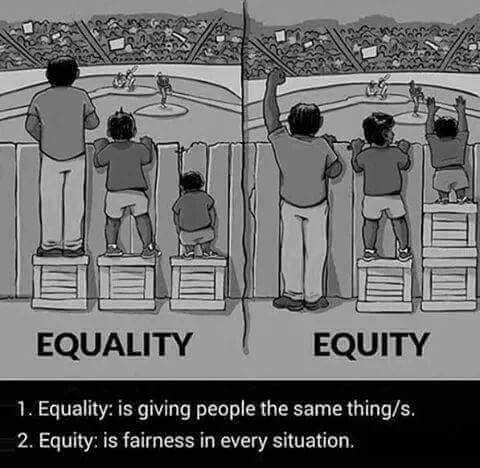
EQUITY. In its broadest and most general signification, this term denotes the spirit and the habit of fairness, justness, and right dealing which would regulate the intercourse of men with men, the rule of doing to all others as we desire them to do to us; or, as it is expressed by Justinian, "to live honestly, to harm nobody, to render to every man his due." Inst. 1, 1, 3. It is therefore the synonym of natural right or justice. But in this sense its obligation is ethical
rather than juraI, and its discussion belongs to the sphere of morlso It is grounded in the precepts of the conscience, not in any sanction of positive law.
BOUVIER’S LAW DICTIONARY UNABRIDGED, RAWLE’S THIRD EDITION
ESTOPPEL
The preclusion of a person from asserting a fact, by previous conduct inconsistent therewith, on his part or the part of those under whom he claims, or by an adjudication upon his rights which he cannot be allowed to call in question.
A preclusion, in law, which prevents a man from alleging or denying a fact, in consequence of his own previous act, allegation, or denial of a contrary tenor. Steph. Pl. 239.
A plea which either admits nor denies the facts alleged by the plaintiff, but denies his right to allege them. Gould, Pl. c. 2, §39.
Equitable estoppel, or estoppel by conduct, is said to have its foundation in fraud, considered in its most general sense; Bisph. Eq. §282. It is said (Bigelow, Estop. 437) that the following elements must be present in order to constitute an estoppel by conduct:
1. There must have been a representation or concealment of material facts,
2. The representation must have been made with knowledge of the facts,
3. The party to whom it was made must have been ignorant of the truth of the matter,
4. It must have been made with the intention that the other party would act upon it,
5. The other party must have been induced to act upon it.
Where the facts are undisputed, the question whether they amount to an estoppel is one of law for the court … Otherwise the facts are to be of course submitted to the jury under proper instructions as to what constitutes an estoppel.
BOUVIER’S LAW DICTIONARY (1856)
ESTOPPEL, pleading. An estoppel is a preclusion, in law, which prevents a man from alleging or denying a fact, in consequence of his own previous act, allegation or denial of a contrary tenor. Stepb. Pl. 239. Lord Coke says, " an estoppel is, when a man is concluded by his own act or acceptance, to say the truth." Co. Litt. 352, a. And
Blackstone defines "an estoppel to be a special plea in bar, which happens where a man has done some act, or executed some deed, which estops or precludes him from averring any thing to the contrary. 3 Cora. 308. Estoppels are odious in law; 1 Serg. & R. 444; they are not admitted in equity against the truth. Id. 442. Nor can jurors be estopped from saying the truth, because they are sworn to do so, although they are estopped from finding against the admission of the parties in their
pleadings. 2 Rep. 4; Salk. 276; B. N. P. 298; 2 Barn. & Ald. 662; Angel on Water Courses, 228-9. See Co. Litt. 352, a, b, 351, a. notes.
2. An estoppel may, arise either from matter of record; from the deed of the party; or from matter in Pais; that is, matter of fact.
3. Thus, any confession or admission made in pleading, in a court of record, whether it be express, or implied from pleading over without a traverse, will forever preclude the party from afterwards contesting the same fact in any subsequent suit with his adversary. Com. Dig. Estoppel, A 1. This is an estoppel by matter of record.
4. As an instance of an estoppel by deed, may be mentioned the case of a bond reciting a certain fact. The party executing that bond, will be precluded from afterwards denying in any action brought upon that instrument, the fact , so recited. 5 Barn. & Ald. 682.
5. An example of an estoppel by matter in pays occurs when one man Las accepted rent of another. He will be estopped from afterwards. denying, in any action, with that person, that he was, at the time of such acceptance, his tenant. Com. Dig. Estoppel, A 3 Co. Litt. 352, a.
6. This doctrine of law gives rise to a kind of pleading that is neither by way of traverse, nor confession. and avoidance: viz. a pleading, that, waiving any question of fact, relies merely on the estoppel, and, after stating the previous act, allegation, or denial, of the opposite party, prays judgment, if he shall be received or admitted to aver contrary to what he before did or said. This pleading is called pleading by way of estoppel. Steph. 240a
7. Every estoppel ought to be reciprocal, that is, to bind both parties: and this is the reason that regularly a stranger shall neither take advantage or be bound by an estoppel. It should be directly affirmative, and not by inference nor against an estoppel. Co. Lit. 352, a, b; 1 R. 442-3; 9 Serg. & R. 371, 430; 4 Yeates' 38 1 Serg. & R. 444; Corn. Dig. Estoppel, C 3 Johns. Cas. 101; 2 Johns. R. 382; 8 W. & S. 135; 2 Murph. 67; 4 Mont. 370. Privies in blood, privies in estate, and
privies in law, are bound by, and may take advantage of estoppels. Co. Litt. 352; 2 Serg. & Rawle, 509; 6 Day, R. 88. See the following cases relating to estoppels by; Matter of record: 4 Mass. R. 625; 10 Mass. R. 155; Munf. R. 466; 3 East, R. 354; 2 Barn. & Ald. 362, 971; 17 Mass. R. 365; Gilm. R. 235; 5 Esp. R. 58; 1 Show. 47; 3 East, R. 346. Matter of writing: 12 Johns. R. 347; 5 Mass. R. 395; Id. 286; 6 Mass. R. 421; 3 John. Cas. 174; 5 John. R. 489; 2 Caines' R. 320; 3 Johns. R.
331; 14 Johns. R. 193; Id. 224; 17 Johns. R. 161; Willes, R. 9, 25; 6 Binn. R. 59; 1 Call, R. 429; 6 Munf. R. 120; 1 Esp. R. 89; Id. 159; Id. 217; 1 Mass. R. 219. Matter in pays: 4 Mass. R. 181; Id. 273 15 Mass. R. 18; 2 Bl. R. 1259; 1 T. R. 760, n.; 3 T. R. 14; 6 T. R. 62; 4 Munf. 124; 6 Esp. R. 20; 2 Ves. 236; 2 Camp. R. 844; 1 Stark. R. 192. And see, in general, 10 Vin. Abr. 420, tit. Estoppel; Bac. Abr. Pleas, 111; Com. Dig. Estoppel; Id. Pleader, S 5; Arch. Civ. Pl. 218; Doct. Pl. 255;
Stark. Ev. pt. 2, p. 206, 302; pt. 4, p. 30; 2 Smith's Lead. Cas. 417-460. Vide Term.
BLACK’S LAW DICTIONARY 8th EDITION
ESTOPPEL
estoppel (e-stop-<<schwa>>l), n.1. A bar that prevents one from asserting a claim or right that contradicts what one has said or done before or what has been legally established as true.
[Cases: Estoppel 52–59. C.J.S. Estoppel §§ 2–4, 58–64, 66–81, 83–89, 120–121, 153–155, 157, 159–160, 167.] 2. A bar that prevents the relitigation of issues. 3. An affirmative defense alleging good-faith reliance on a misleading representation and an injury or detrimental change in position resulting from that reliance. Cf. WAIVER(1). [Cases: Estoppel 83–87. C.J.S. Estoppel §§ 90–95.]
— estop,vb.
“ ‘Estoppe,’ says Lord Coke, ‘cometh of the French word estoupe, from whence the English word stopped; and it is called an estoppel or conclusion, because a man's own act or acceptance stoppeth or closeth up his mouth to allege or plead the truth.’ [Co. Litt. 352a.] Estoppel may also be defined to be a legal result or ‘conclusion’ arising from an admission which has either been actually made, or which the law presumes to have been made, and which is binding on all persons whom it affects.”
Lancelot Feilding Everest, Everest and Strode's Law of Estoppel 1 (3d ed. 1923).
“In using the term ‘estoppel,’ one is of course aware of its kaleidoscopic varieties. One reads of estoppel by conduct, by deed, by laches, by misrepresentation, by negligence, by silence, and so on. There is also an estoppel by judgment and by verdict; these, however, obviously involve procedure. The first-named varieties have certain aspects in common. But these aspects are not always interpreted by the same rules in all courts. The institution seems to be flexible.” John H. Wigmore, “The
Scientific Role of Consideration in Contract,” in Legal Essays in Tribute to Orrin Kip McMurray 641, 643 (1935).
|
|
|